
Goth Style vs Goth Subculture: What’s the Difference?

Goth Style vs Goth Subculture at a Glance
The terms "goth style" and "goth subculture" might appear interchangeable, but they describe different parts of goth culture. In simple terms, goth subculture has its roots in music, while goth style refers to fashion and visual expression connected to or inspired by that culture. They often overlap, but they are not identical.
| Goth Subculture | Goth Style/Aesthetic |
|---|---|
| Music and scene history | Visual fashion or aesthetic |
| Post-punk and gothic rock roots | Can come from different periods and online movements |
| No fixed uniform | Defined mainly by visual choices |
| Gothic rock, darkwave, deathrock | Romantic Goth, Pastel Goth, Whimsigoth |
What Makes Goth a Subculture?
Goth developed from the late-1970s and early-1980s post-punk scene, with bands such as Bauhaus and Siouxsie and the Banshees helping shape its early sound. Music remains the foundation, while clubs, DIY fashion, art, and community became important parts of the wider scene.
What Is Goth Style?
Goth style is the visual side of the culture. It can include clothing, makeup, hairstyles, silhouettes, fabrics, and accessories influenced by goth scenes or darker aesthetics. Someone can enjoy goth-inspired fashion without automatically being part of the music-based subculture.

Why Are There So Many “Types of Goth” Online?
Platforms such as TikTok and Pinterest have made labels like Pastel Goth, Whimsigoth, Romantic Goth, and other micro-aesthetics much more visible. Many of these terms describe fashion rather than separate music scenes, which is why online lists of “goth types” can become confusing.
Which Goth Styles Have Scene Roots?
Trad Goth has strong connections to the early goth music scene and its DIY fashion. Deathrock also has genuine scene and music roots, developing through the U.S. punk and goth crossover of the late 1970s and early 1980s.
Their fashion became recognizable because of the scenes around them, but clothing alone does not define either one.
What About Pastel Goth, Cybergoth and Whimsigoth?
Pastel Goth and Whimsigoth are primarily fashion or internet aesthetics rather than traditional goth music branches.
Cybergoth is different again. It developed through strong influences from industrial, EBM, electronic, rave, and alternative club culture. It is better understood as a crossover scene than as the same kind of goth category as Trad Goth.
Can You Dress Goth Without Being Goth?
Yes. Someone can enjoy goth-inspired clothing, makeup, or design without participating in the music scene. Fashion is also how many people first discover goth culture and become curious about its music and history.
Do Goths Have to Dress Goth?
No. There is no required goth uniform. Someone can listen to goth music, attend events, and participate in the scene while dressing casually or mixing several styles.
Goth vs Gothic
"Goth" usually refers to the modern music-based subculture. "Gothic" is a much broader term connected to literature, architecture, art, historical design, horror, fashion, and other cultural traditions that existed long before the goth music scene.
The two can overlap visually, but they are not the same thing.
Explore Goth Styles
For a deeper look at Trad Goth, Romantic Goth, Pastel Goth, Cybergoth, Whimsigoth, and other labels, explore our full visual guide.
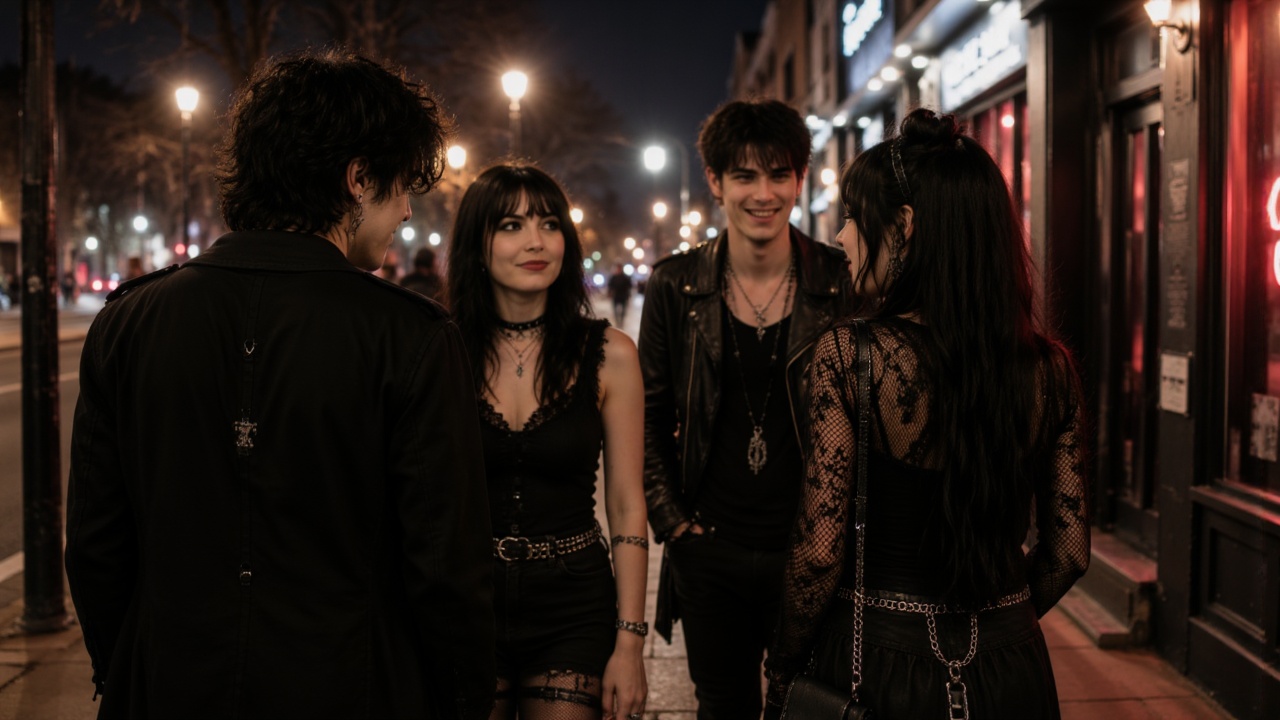
Understanding the difference between goth style and goth subculture makes it easier to explore the scene without treating every dark fashion label as the same thing.
If you're interested in connecting with goth, alternative, emo, metal, and punk singles, explore DarkHeart.

Date YourDarkness
Join thousands of goth singles on DarkHeart. Download the app and start connecting with people who share your dark aesthetic.


Date your Darkness
Join thousands of goth singles on DarkHeart. Download the app and start connecting with people who share your dark aesthetic.

